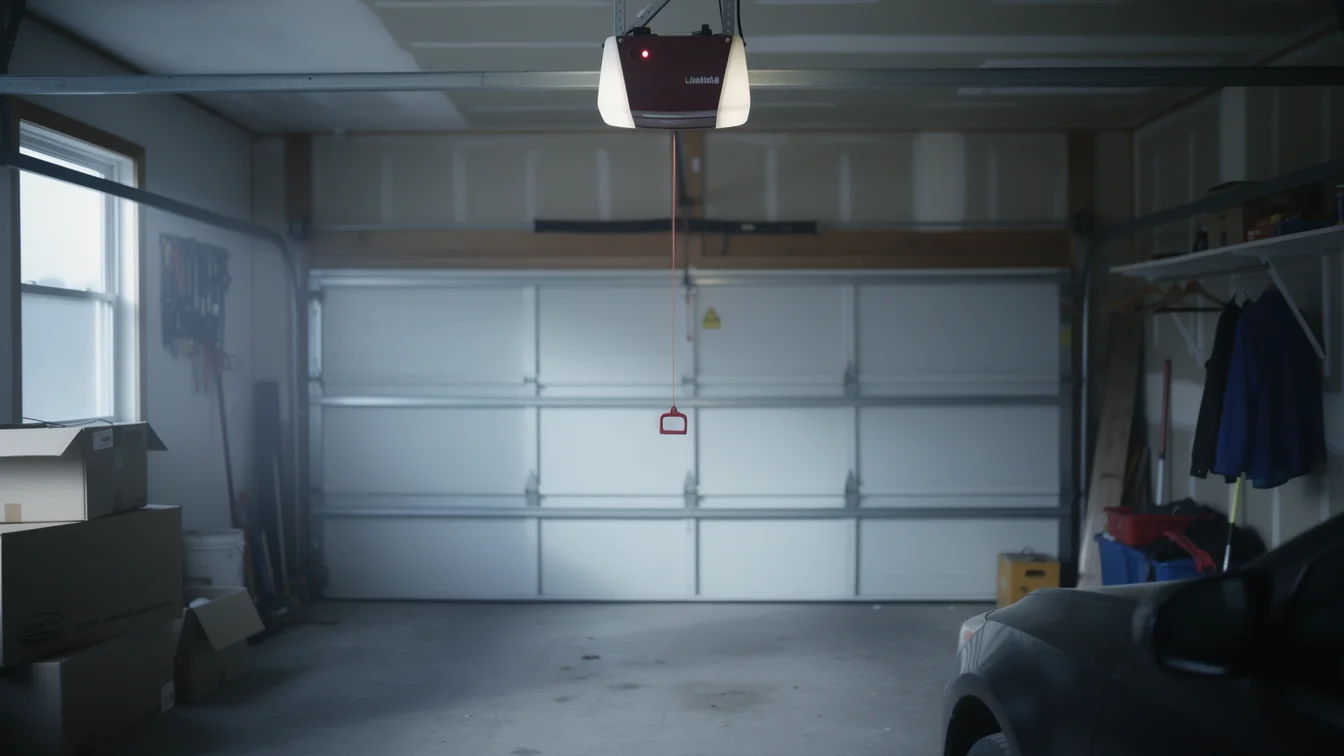
 What Happens to an Olive Branch Garage Door Opener During a Power Cut
Olive Branch homes built between 1980 and 2001 often have original openers that strain during power cuts and cold snaps - here's what typically fails.
BlogOlive Branch, MS · 5 min read
Is Your Olive Branch Garage Door Worth Fixing, or Done
Most Olive Branch homes date to the 1980s-90s building boom. Here's how that age and our cold-moderate winters decide if your door is worth repairing.
Local detail
The Common Mistake
The mistake we see most is treating every garage door call the same way, no matter how old the door is. A homeowner hears a loud bang, assumes the worst, and either replaces a door that had another ten years in it or keeps pouring money into one that's past the point of sense.
In Olive Branch that decision actually has a pattern behind it, because so much of the housing stock went up in the same stretch of years. Across the six named areas we work, most houses were built between 1980 and 2001, with the median landing around 1993. That means a huge share of the doors we open up are the same handful of builder-grade models from that era, with the same springs, the same tracks, and the same weak points.
If your house falls in that range, the question isn't really "is this door old" - almost all of them are, by now. The question is whether the specific part that failed is a $150 fix on a door that's otherwise sound, or the fourth symptom of a door that's simply reached the end of its run. Guessing wrong in either direction costs you money you didn't need to spend.
The area
How Local Conditions Play In
Olive Branch sits in a cold-moderate climate band, not the deep freeze you'd get further north and not the mild winters you'd get further south. That matters for a 20-to-40-year-old door because it's the swing between damp fall mornings and a hard overnight freeze that does the real damage - not one dramatic cold snap, but repeated expansion and contraction on steel that's already fatigued.
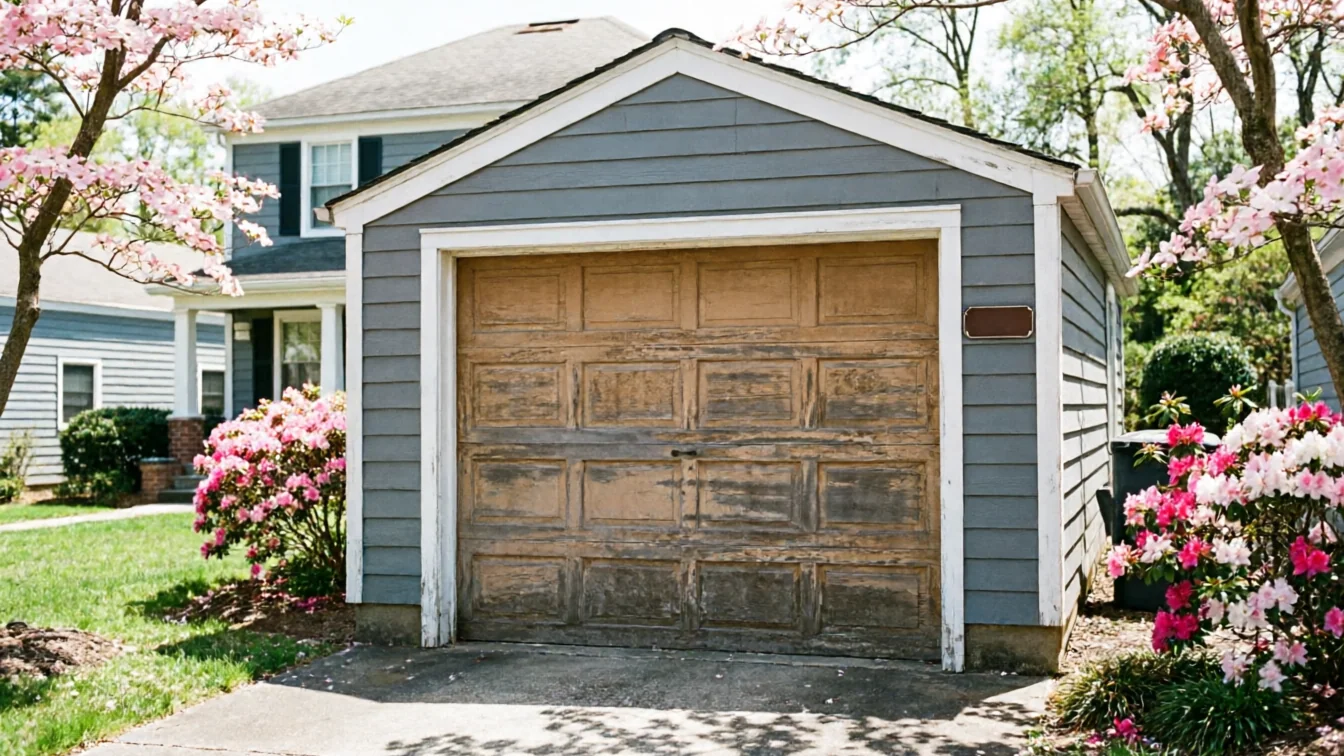
A door built in the early 1990s wasn't engineered with today's insulation or weatherstripping standards in mind. On a lot of the original doors still in service here, the bottom seal has hardened and cracked, letting cold air and moisture into the garage each time the temperature drops below freezing and climbs back out. That moisture is what eats at the bottom panel and the hardware before anything else on the door.
So in this area, the panel closest to the slab and the springs carrying the daily cycle are usually the first things worth inspecting on a door built in that 1980-2001 window - not because the whole door is bad, but because those are the parts the cold-moderate swing works on hardest.
What we find
What Is Going On
When a door from that 1980-2001 stretch starts acting up, it's rarely one thing. The spring loses tension because it's been cycling for two or three decades. The rollers wear out of round because they're the same stamped-steel rollers that shipped standard back then, not the sealed-bearing kind. The opener, if it's original, is carrying a chain drive built for a lighter standard than today's insulated panels.
Worth fixing usually means: the track is straight, the panels aren't rusted through at the bottom, and the problem is a single part - spring, cable, roller, or opener - rather than three of those at once. We can replace a spring or swap an opener on a door like that and get another decade out of it without much argument.
Not worth fixing usually means the bottom panel has rotted from years of moisture cycling, the track is bent from someone backing into it, and the springs are shot at the same time. At that point you're not fixing a door, you're rebuilding one piece by piece, and the parts bill starts to pass what a new door costs. We'll tell you straight when we're at that line - we don't have an incentive to talk you into a repair that's really a stall.
How we work
Season by Season
Fall is when the cracks in an old bottom seal start to matter, as nights cool and moisture works its way in under the door each morning. This is the season to check that seal on anything built in the 1980-2001 range, before the first hard freeze finds the gap for you.
Winter is when fatigued springs tend to announce themselves, because cold steel is less forgiving and the door is getting lifted on a part that's already lost tension. A spring that was marginal in October can snap in January.
Spring brings the moisture back the other direction - thaw, rain, and humidity working on any rust that started over the winter, especially on doors near grade with a worn bottom panel.
Summer is the easiest season on an older door here, but it's also the best time to get ahead of next winter: replace a seal, true up a track, or swap a tired opener while there's no urgency and no cold to work around. Across the service area's roughly 11,147 owner-occupied houses, a good share are carrying a door from that same build era, and doing this work in the slow season instead of the emergency one is usually the cheaper path.
Questions
Common questions
My garage door is from the early 1990s - should I just replace it now?
Not automatically. If the track is straight and it's a single failed part - a spring, a roller, a cable - a repair usually makes more sense than full replacement. We only push replacement when the panel itself has deteriorated or multiple systems are failing at once.
Why does my door act up more in winter?
Olive Branch sits in a cold-moderate band, and the repeated swing between freezing nights and warmer days is harder on fatigued steel than one hard freeze would be. Springs built in the 1980s-90s era were sized for lighter, less-insulated panels and lose tension faster under that cycling.
Is it worth fixing the bottom seal on an old door?
Usually yes, and it's one of the cheapest things you can do. A cracked seal on an older door lets in the moisture that eventually rots the bottom panel. Replacing it early is a lot less than replacing the panel later.
How do I know if my door is original to the house?
If your house was built in the 1980-2001 window common across this area and nobody's mentioned a replacement, it's worth assuming the door and opener are original until a tech confirms otherwise. The hardware style usually gives it away quickly.
Recommendation
You Might Also Like
More garage door guides for Olive Branch homeowners.
What Happens to an Olive Branch Garage Door Opener During a Power Cut
Olive Branch homes built between 1980 and 2001 often have original openers that strain during power cuts and cold snaps - here's what typically fails.
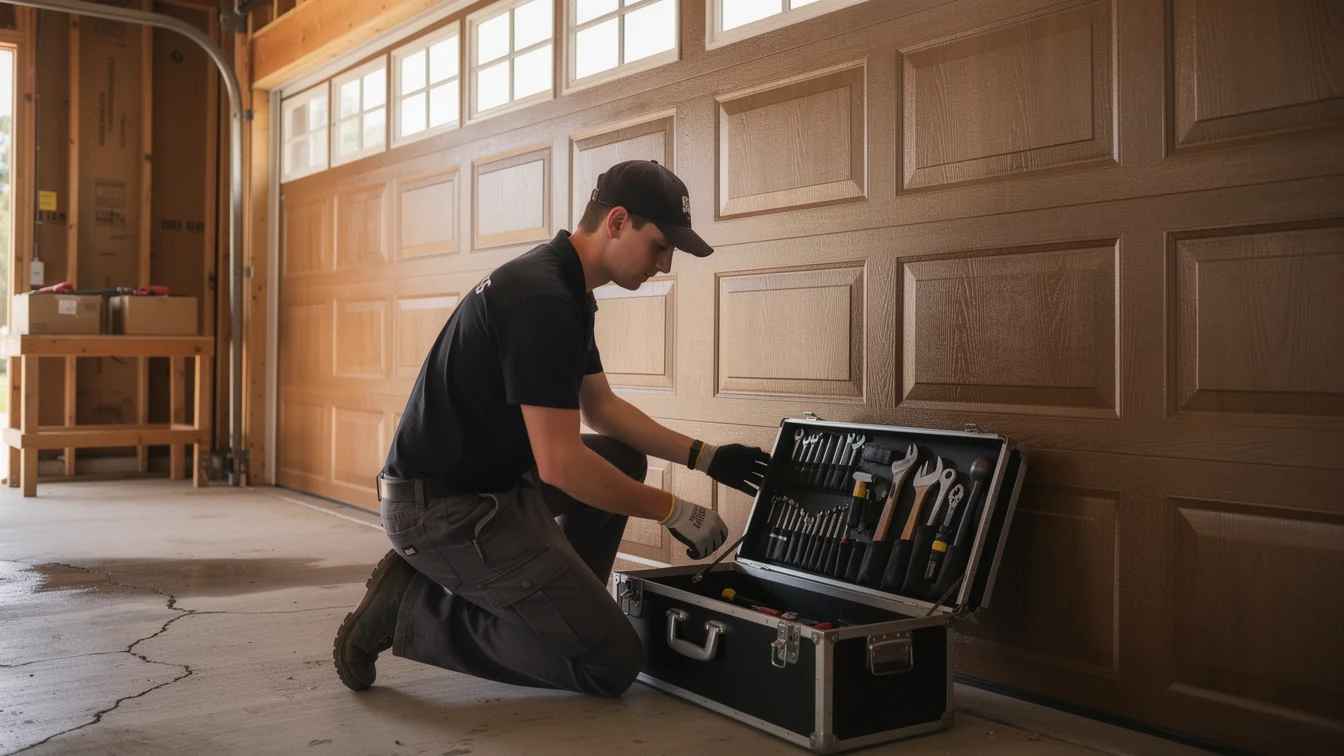 What a Service Call Actually Covers
A straight look at what a garage door service call covers in Olive Branch, tied to the town's 1980s-90s housing stock and cold-moderate winters.
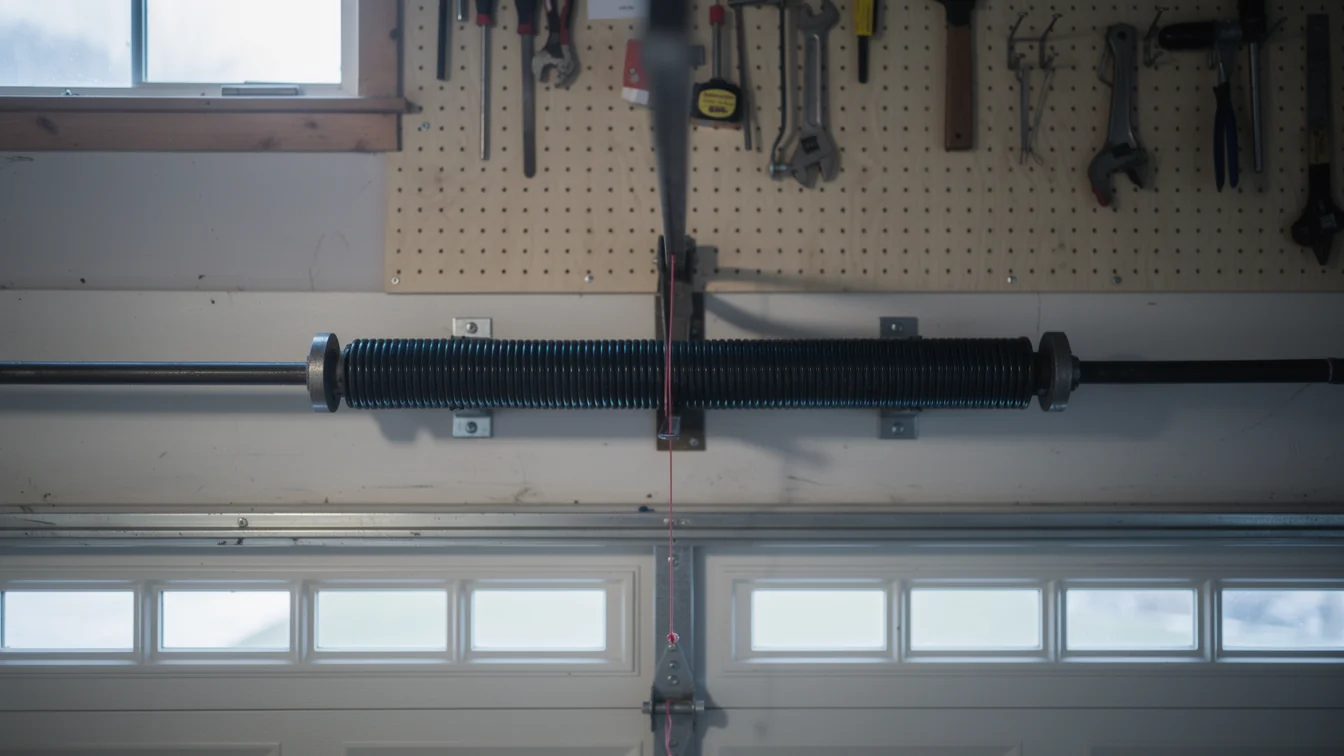 Cold Weather and the Original Springs on Olive Branch Garages
Olive Branch homes mostly date to 1980-2001, so original torsion springs are aging fast.
Ready when you are
Need a garage door sorted in Olive Branch?
Olive Branch Garage Door Pros repairs and installs garage doors, springs and openers in Olive Branch, MS and the surrounding area.